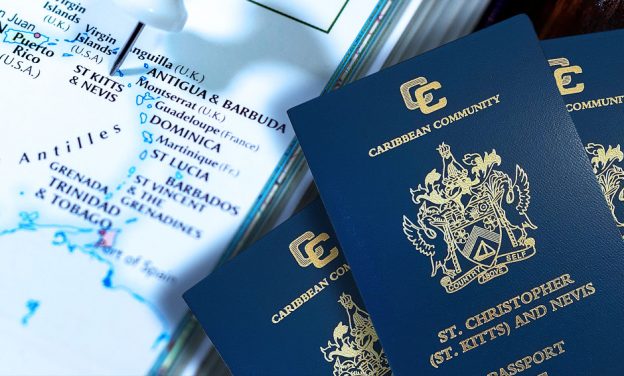

If you want a second passport in 2026 without drifting into seven-figure “prestige” territory, you should focus on the Eastern Caribbean’s established Citizenship by Investment (CBI) programs. These jurisdictions run mature due diligence, they process efficiently, and—most importantly for this guide—in 2026 they still sit at the most affordable end of the legal second-citizenship market.
However, “affordable” in CBI rarely means “cheap.” You need to price the full stack: the qualifying investment, government fees, due diligence, and the family structure you plan to include. Accordingly, this guide breaks down the Most affordable Citizenship by Investment 2026 options that Apex Capital Partners features, with up-to-date minimum investment thresholds and the real decision points that matter.
What “Most Affordable” Actually Means in CBI in 2026 (and what it doesn’t)
Many people compare headline donation amounts and stop there. That shortcut often backfires.
In 2026, affordability comes down to four levers:
- Minimum qualifying investment (donation/fund contribution vs. real estate)
- Government fees and due diligence costs (which can move the all-in number dramatically for families)
- Holding period and exit friction (real estate can return capital, yet it also adds resale timing and project risk)
- Processing efficiency and predictability (cheap on paper means nothing if delays create opportunity cost)
As a result, the “best” low-cost program depends on your profile:
- A solo applicant who wants speed and simplicity often prefers the lowest contribution threshold.
- A family might pay more upfront yet save money through more favorable dependent rules.
- An investor who wants optional capital recovery may prefer approved real estate even with a higher all-in outlay.
2026 Most Affordable Citizenship by Investment Snapshot: The Lowest Minimum Investments
Here’s the simplest way to frame the 2026 landscape: Dominica sets the lowest published minimum investment threshold at US$200,000 through the government’s Economic Diversification Fund (EDF) route (official program site), and its therefore the most affordable citizenship by investment program starting 2026.
From there, minimum contribution thresholds step up:
- Antigua and Barbuda: National Development Fund (NDF) minimum US$230,000 per application (government source).
- Grenada: National Transformation Fund (NTF) minimum US$235,000 (official program site).
- Saint Lucia: National Economic Fund (NEF) minimum commonly published at US$240,000 in 2026-focused program guides (official program site).
- St. Kitts and Nevis: Sustainable Island State Contribution (SISC) minimum US$250,000 (official CIU).
Those figures give you the floor. Next, you need to decide which “affordable” story fits your goals.
Dominica: The 2026 Price Leader for Straightforward Affordability
If your primary goal is to keep the qualifying investment as low as possible in 2026, Dominica typically takes the top spot.
Why Dominica often wins the “most affordable” race
- EDF contribution starts at US$200,000 for the main applicant (official government unit).
- Real estate minimum also sits at US$200,000 in approved projects (official government unit).
Therefore, you can choose:
- Donation-style simplicity (EDF): clean, predictable, no resale worries.
- Asset-backed route (real estate): potential capital recovery, with a required holding period (Dominica’s program materials outline holding timelines that vary by resale scenario).
Who should choose Dominica in 2026
Pick Dominica when you want:
- The lowest minimum qualifying investment among the mainstream Caribbean options.
- A program with clear published thresholds straight from the government unit.
- Flexibility to go donation or real estate without jumping to a higher entry level.
On the other hand, if you want a stronger “lifestyle” tie to a larger tourism hub—or you want a specific travel or business use case—another island may fit better.
Antigua and Barbuda: Family-Friendly Structure and a Defined Residency Rule
Antigua and Barbuda can deliver strong value in 2026 for applicants who plan to actually use the citizenship—especially families who want a Caribbean base.
2026 minimum investment routes that matter
- NDF contribution: minimum US$230,000 per application (official government program page).
- Real estate: government program rules include a 5-year resale restriction (official program page).
Antigua’s rules also include a practical compliance detail: the country requires 5 days of physical presence within the first 5 years after citizenship for many applicants, as published by the official unit.
Why Antigua can still feel “affordable” in practice
The Antigua decision often comes down to value per person rather than the lowest headline number. If your family structure aligns well with Antigua’s dependent rules and you like the idea of building a real relationship with the country, the program can justify a slightly higher minimum contribution than Dominica.
Additionally, Antigua remains a standout when you want a “usable” second citizenship: you can visit, spend time there, and treat it as more than a document in a safe.
Grenada: Affordability Plus a Distinctive Strategic Advantage
Grenada rarely wins the “absolute cheapest” comparison in 2026, yet it often wins the most strategic affordable comparison.
The 2026 minimum investment baseline
- NTF minimum contribution: US$235,000 (Grenada’s official investment migration agency).
Grenada also supports a real estate option in the program structure, which many market guides discuss, but the cleanest baseline remains the official NTF figure above when you want an up-front, predictable number.
Why Grenada can outperform “cheaper” options
Grenada’s biggest differentiator: it can unlock the ability to pursue the U.S. E-2 treaty investor visa pathway for eligible applicants (a widely discussed strategic reason investors select Grenada).
As a result, many entrepreneurs treat Grenada as a two-step plan:
- secure Grenadian citizenship through CBI, then
- use that citizenship to support a U.S. E-2 strategy (when appropriate).
If you want a low-six-figure path that connects to a bigger business plan, Grenada deserves a serious look.
Saint Lucia: A Clean Donation Baseline and Multiple Investment Styles
Saint Lucia often sits in the “still affordable, slightly higher floor” bracket in 2026. It appeals to applicants who want options—donation, real estate, bonds, and enterprise routes—without drifting away from Caribbean processing practicality.
2026 minimum donation baseline
Many 2026-focused guides cite US$240,000 as the minimum National Economic Fund (NEF) contribution.
Because Saint Lucia’s program ecosystem includes multiple routes, it’s useful when your plan might shift. For example, you may start thinking “donation,” then realize you prefer an asset-based or project-based structure. Saint Lucia’s framework gives you more stylistic flexibility than some neighbors, even if the entry number sits higher than Dominica.
St. Kitts and Nevis: the premium option inside the “affordable” tier
St. Kitts and Nevis runs the world’s oldest CBI program, and it often prices itself accordingly. Still, in a global context, it remains inside the affordable tier—just at the upper end among the Caribbean programs covered here.
2026 minimum contribution baseline (official)
- Sustainable Island State Contribution (SISC): US$250,000 for a main applicant or a family of up to four (official CIU).
The CIU also confirms other routes (for example, the Public Benefit Option with a US$250,000 minimum) and real estate pathways with higher entry points.
When St. Kitts makes sense despite the higher minimum
Choose St. Kitts and Nevis in 2026 when:
- You want the reputational weight of the longest-running program.
- You value the program’s defined, published investment routes and institutional history.
- You prefer to “buy the best in the category” rather than chase the absolute lowest threshold.
Donation vs. real estate in 2026: how to choose without regrets
Most applicants start with donations because the math looks simple. That simplicity helps, but you still need to choose deliberately.
Choose a fund contribution when you want:
- Maximum predictability
- Minimal administrative burden
- No project management, no resale timeline, no market risk
That approach aligns well with Dominica’s EDF minimum (US$200,000) and the published contribution routes across Antigua, Grenada, Saint Lucia, and St. Kitts.
Choose approved real estate when you want:
- A chance to recover some capital later
- A tangible asset tied to your plan (personal use, rentals, diversification)
However, you must respect holding and resale restrictions. For example, Antigua’s official program states a 5-year restriction on resale under its real estate option. Dominica’s official materials also describe required holding periods and resale conditions for approved projects.
Accordingly, real estate can cost more up front, yet it can reduce long-term “net cost” if you exit cleanly.
The biggest 2026 pricing mistake: ignoring the “per-dependent” reality
The main applicant number rarely tells the whole story.
- St. Kitts SISC explicitly sets a baseline for a main applicant or family up to four, then adds dependent pricing rules (official CIU).
- Dominica’s EDF starts at US$200,000 for the main applicant, and the government unit notes that fees rise when you add dependants.
Therefore, you should price your case like an accountant, not like a tourist:
- Who joins the file on day one?
- Who might you add later?
- Do you need sibling or parent eligibility?
- Do you care about a residency visit requirement (Antigua’s 5-day rule matters if you dislike travel obligations)?
How Apex Capital Partners helps you keep the process efficient in 2026
In affordable CBI, you don’t “win” by trimming the investment by a few thousand and then losing months to avoidable mistakes. You win by submitting a clean file, documenting funds properly, and selecting the right pathway the first time.
Apex Capital Partners focuses on doing this the professional way:
- Program-fit guidance based on your goals (speed, simplicity, family structure, business strategy)
- Document planning and source-of-funds packaging that reduces friction
- End-to-end coordination with authorized/local partners and government-facing requirements
- Straight answers when a “cheap” idea introduces bigger risk
As a result, you protect your timeline and your outcome—two variables that matter more than shaving the last dollar off a minimum threshold.
Which program should you pick for “Most affordable Citizenship by Investment 2026”?
Use this quick decision filter:
- I want the lowest published entry point → Start with Dominica (US$200,000).
- I want a family-friendly Caribbean base and I don’t mind a short visit requirement → Consider Antigua and Barbuda (US$230,000).
- I want an affordability-focused passport that can support a U.S. E-2 strategy → Grenada (US$235,000) often fits.
- I want multiple investment styles with a clear donation baseline → Look at Saint Lucia (US$240,000).
- I want the legacy program and I accept the higher floor → St. Kitts and Nevis (US$250,000).
Your next move: turn “research mode” into a real strategy
Reading about the Most affordable Citizenship by Investment 2026 options helps, yet the best result comes from matching the program to your exact profile—family members, timeline, risk tolerance, and long-term use case.
If you want the cleanest path forward, Apex Capital Partners can map your best-fit program, show you the true all-in budget for your household, and structure the process so you move once and move correctly—without wasting time on options that only look affordable on a headline.